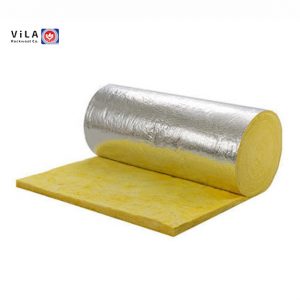
Vila Rock Wool Fenopanel is an advanced board insulation made of compressed rock wool with an aluminum facing. With very high density and a robust structure, this product is designed for insulating flat surfaces in high-temperature industries such as furnaces, boilers, and industrial walls.
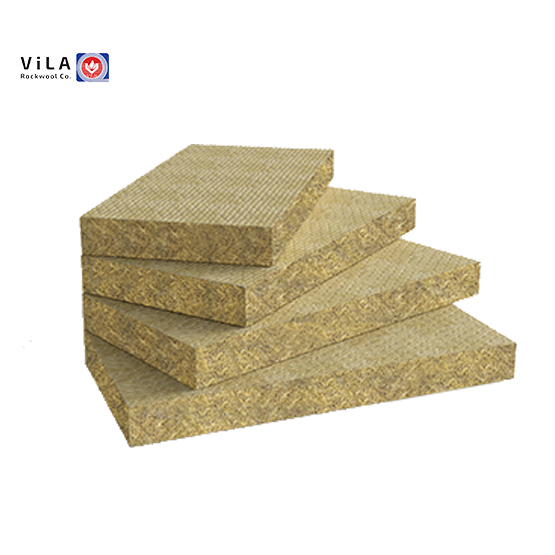
Vila Rock Wool Fenopanel: Compressed Board Insulation with Aluminum Facing for High-Temperature Industrial Applications
Heat Resistant up to 800°C – Ideal for Furnaces, Steam Boilers, and Industrial Walls
Technical Product Introduction:
Vila Rock Wool Fenopanel is manufactured using basalt rock fibers and advanced cold-pressing technology. The aluminum facing on the product surface, in addition to increasing mechanical strength, reduces moisture penetration and increases thermal reflection. The compact and uniform structure of this insulation provides outstanding thermal efficiency under harsh industrial conditions.
Key Advantages of Vila Rock Wool Fenopanel:
-
Outstanding thermal resistance: withstands temperatures up to 800°C
-
High mechanical strength: suitable compressive resistance for industrial applications
-
Aluminum facing: increased resistance to moisture and thermal reflection
-
Quick and easy installation: panel design and capability of mechanical installation
-
Fire resistant: non-combustible (Class A1)
-
Long service life: resistant to abrasion and harsh environmental conditions
-
Sound absorption: reduces noise and vibration in industrial environments
Main Applications:
-
Furnace industry: insulation of induction and resistance furnace bodies
-
Power plants: insulation of boilers, steam boilers, and turbines
-
Steel and smelting industries: induction furnaces, molten metal transfer channels
-
Refineries and petrochemicals: insulation of reactors, tanks, and industrial walls
-
Chimney systems: insulation of industrial chimney walls
-
Production halls: partition walls and industrial ceilings
Unique Features of Vila Rock Wool:
Vila Rock Wool, utilizing advanced technical knowledge and modern equipment, manufactures Fenopanel to the highest quality standards. Strict quality control at all stages of production guarantees optimal product performance under the most demanding working conditions.
Additional Details:
Rock wool board – Board Insulation (Fenopanel – Compressed Board Insulation) is another product of resin-bonded rock wool and slag insulation. Board insulation, or Fenopanel, is a very suitable insulation not only for heat and cold but also for sound. Fenopanel rock wool board is made from resin-bonded wool compressed by heavy hot presses and is produced as semi-rigid and rigid boards. The effective resistance of the panels to heat is up to 350°C. High density and strength are the most important reasons why Fenopanel rock wool is used in construction as thermal and acoustic insulation. This type of rock wool, after heat treatment in the oven, comes out as smooth boards and is therefore suitable for use on flat and even surfaces. This type of insulation has higher density and strength than pipe insulation. In line with meeting consumer needs and eliminating cooling and heating energy losses, Vila Rock Wool Company has produced and supplied various types of rock wool insulation facings according to consumer preferences.
Installation Method for Rock Wool Board
Rock wool board insulation is installed on flat surfaces and, with its lower densities, on surfaces with a slight slope, and a covering is placed over it.
Applications of Rock Wool Board
As we know, various insulations are used for thermal and electrical resistance applications, and one of the best of these products is rock wool board insulation, which is produced from rock wool and resin using pressing methods and has many more applications than just thermal uses in industry. Rock wool insulation falls into the thermal insulation group and is made of mineral fibers, which is an inorganic and non-metallic material made from dolomite and basalt rocks. Basalt and dolomite rock, along with some slag as a flux, is melted at a temperature of 1300 to 1500°C. The resulting molten material is then converted into fine fibers by special methods, forming a woven network called rock wool.
In fact, rock wool board insulation is the most practical product among rock wool products because its field of activity is very broad and its use improves quality and efficiency in almost all industries. Rock wool board thermal insulation is used in buildings as insulation between wall leaves to reduce energy loss, and in recording studios, subway tunnels, conference hall walls, airports, mosques, libraries, ships, hotels, and sports halls for sound absorption and vibration prevention. Petrochemical complexes, refineries, power plants, industrial centers, and buildings are among the main consumers of rock wool board insulation.
Compressed rock wool panel insulation is used both in partition walls and main walls, and between walls, as thermal and acoustic insulation as well as fireproof insulation. Fenopanel is also used in the manufacture of sandwich panels.
Production Method of Rock Wool Board Insulation
After melting basalt rock in the furnace and its exit, the melt immediately enters the fiberizing machine with the help of very powerful blowers.
At the same time, a special resin with specific compounds, mainly phenolic resin and water, is added to the sprayed melt.
At the end of the fiberizing machine, we see rock wool fibers that are slightly wet. This is called resin-bonded rock wool.
Adding resin to rock wool fibers creates adhesion between the fibers and actually facilitates the molding process.
After this stage, the resin-impregnated rock wool enters the curing machine according to customer order with the specified density and thickness. For example, if we want to produce rock wool board with a thickness of 50 mm and a density of 80 kg/m³, 4 kg of resin-bonded raw wool is required per square meter.
Since resin-bonded rock wool contains water and loses its water after entering the curing machine, usually 10% more than the calculated weight of wool is added. For example, to produce 1 square meter of rock wool board with a thickness of 50 mm, 4.4 kg of wool is considered.
Properties of Rock Wool Board
One of the important properties of this insulation is that if it is set on fire, this product shows resistance and does not burn, and is recognized as a type of fire protection. During a fire, steel structures lose their mechanical strength due to heat absorption and melting, and the entire structure collapses; therefore, this product is used to insulate steel structures in columns and beams of buildings.
This product is an unsuitable environment for pests and, as an inorganic material, is considered a safe environment against these parasites. Among the types of insulation made in the world to date, rock wool is the most harmless and is completely environmentally friendly. This product may cause sensitivity, and to maintain health during its use and installation, a mask, goggles, and gloves must be used, because during installation, rock wool particles may fall and enter the respiratory system, eyes, and cause skin sensitivity.
- description
-
Vila Rock Wool Fenopanel: Compressed Board Insulation with Aluminum Facing for High-Temperature Industrial Applications
Heat Resistant up to 800°C – Ideal for Furnaces, Steam Boilers, and Industrial Walls
Technical Product Introduction:
Vila Rock Wool Fenopanel is manufactured using basalt rock fibers and advanced cold-pressing technology. The aluminum facing on the product surface, in addition to increasing mechanical strength, reduces moisture penetration and increases thermal reflection. The compact and uniform structure of this insulation provides outstanding thermal efficiency under harsh industrial conditions.
Key Advantages of Vila Rock Wool Fenopanel:
-
Outstanding thermal resistance: withstands temperatures up to 800°C
-
High mechanical strength: suitable compressive resistance for industrial applications
-
Aluminum facing: increased resistance to moisture and thermal reflection
-
Quick and easy installation: panel design and capability of mechanical installation
-
Fire resistant: non-combustible (Class A1)
-
Long service life: resistant to abrasion and harsh environmental conditions
-
Sound absorption: reduces noise and vibration in industrial environments
Main Applications:
-
Furnace industry: insulation of induction and resistance furnace bodies
-
Power plants: insulation of boilers, steam boilers, and turbines
-
Steel and smelting industries: induction furnaces, molten metal transfer channels
-
Refineries and petrochemicals: insulation of reactors, tanks, and industrial walls
-
Chimney systems: insulation of industrial chimney walls
-
Production halls: partition walls and industrial ceilings
Unique Features of Vila Rock Wool:
Vila Rock Wool, utilizing advanced technical knowledge and modern equipment, manufactures Fenopanel to the highest quality standards. Strict quality control at all stages of production guarantees optimal product performance under the most demanding working conditions.
Additional Details:
Rock wool board – Board Insulation (Fenopanel – Compressed Board Insulation) is another product of resin-bonded rock wool and slag insulation. Board insulation, or Fenopanel, is a very suitable insulation not only for heat and cold but also for sound. Fenopanel rock wool board is made from resin-bonded wool compressed by heavy hot presses and is produced as semi-rigid and rigid boards. The effective resistance of the panels to heat is up to 350°C. High density and strength are the most important reasons why Fenopanel rock wool is used in construction as thermal and acoustic insulation. This type of rock wool, after heat treatment in the oven, comes out as smooth boards and is therefore suitable for use on flat and even surfaces. This type of insulation has higher density and strength than pipe insulation. In line with meeting consumer needs and eliminating cooling and heating energy losses, Vila Rock Wool Company has produced and supplied various types of rock wool insulation facings according to consumer preferences.
Installation Method for Rock Wool Board
Rock wool board insulation is installed on flat surfaces and, with its lower densities, on surfaces with a slight slope, and a covering is placed over it.
Applications of Rock Wool Board
As we know, various insulations are used for thermal and electrical resistance applications, and one of the best of these products is rock wool board insulation, which is produced from rock wool and resin using pressing methods and has many more applications than just thermal uses in industry. Rock wool insulation falls into the thermal insulation group and is made of mineral fibers, which is an inorganic and non-metallic material made from dolomite and basalt rocks. Basalt and dolomite rock, along with some slag as a flux, is melted at a temperature of 1300 to 1500°C. The resulting molten material is then converted into fine fibers by special methods, forming a woven network called rock wool.
In fact, rock wool board insulation is the most practical product among rock wool products because its field of activity is very broad and its use improves quality and efficiency in almost all industries. Rock wool board thermal insulation is used in buildings as insulation between wall leaves to reduce energy loss, and in recording studios, subway tunnels, conference hall walls, airports, mosques, libraries, ships, hotels, and sports halls for sound absorption and vibration prevention. Petrochemical complexes, refineries, power plants, industrial centers, and buildings are among the main consumers of rock wool board insulation.
Compressed rock wool panel insulation is used both in partition walls and main walls, and between walls, as thermal and acoustic insulation as well as fireproof insulation. Fenopanel is also used in the manufacture of sandwich panels.Production Method of Rock Wool Board Insulation
After melting basalt rock in the furnace and its exit, the melt immediately enters the fiberizing machine with the help of very powerful blowers.
At the same time, a special resin with specific compounds, mainly phenolic resin and water, is added to the sprayed melt.
At the end of the fiberizing machine, we see rock wool fibers that are slightly wet. This is called resin-bonded rock wool.
Adding resin to rock wool fibers creates adhesion between the fibers and actually facilitates the molding process.
After this stage, the resin-impregnated rock wool enters the curing machine according to customer order with the specified density and thickness. For example, if we want to produce rock wool board with a thickness of 50 mm and a density of 80 kg/m³, 4 kg of resin-bonded raw wool is required per square meter.
Since resin-bonded rock wool contains water and loses its water after entering the curing machine, usually 10% more than the calculated weight of wool is added. For example, to produce 1 square meter of rock wool board with a thickness of 50 mm, 4.4 kg of wool is considered.
Properties of Rock Wool Board
One of the important properties of this insulation is that if it is set on fire, this product shows resistance and does not burn, and is recognized as a type of fire protection. During a fire, steel structures lose their mechanical strength due to heat absorption and melting, and the entire structure collapses; therefore, this product is used to insulate steel structures in columns and beams of buildings.
This product is an unsuitable environment for pests and, as an inorganic material, is considered a safe environment against these parasites. Among the types of insulation made in the world to date, rock wool is the most harmless and is completely environmentally friendly. This product may cause sensitivity, and to maintain health during its use and installation, a mask, goggles, and gloves must be used, because during installation, rock wool particles may fall and enter the respiratory system, eyes, and cause skin sensitivity.
related post
-
- more information
-
- Review
-
Reviews
There are no reviews yet.


Reviews
There are no reviews yet.